
From Crisis to Control - A Patient’s Story
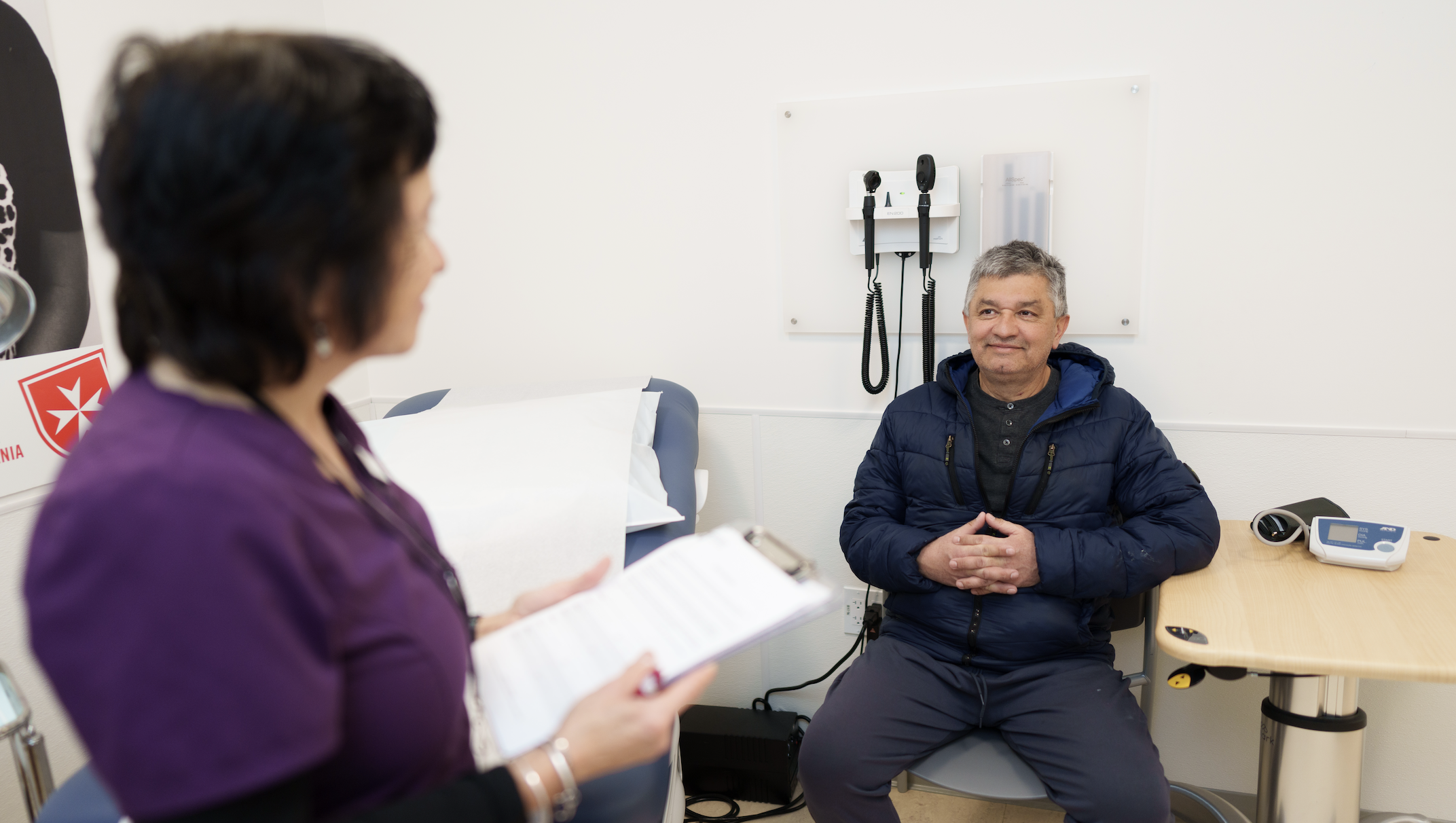
The American Diabetes Association puts it bluntly: “DKA is no joke.” Diabetic Ketoacidosis is a severe, life-threatening complication of diabetes that occurs when the body, lacking enough insulin, breaks down fat for fuel, producing toxic levels of ketones in the bloodstream. At high levels, these ketones can literally poison the body.
In 2022, Armando was referred to the Order of Malta Clinic following a three-day hospital stay for DKA at Alta Bates Medical Center. Just five months earlier, he had fled Colombia to escape a dangerous and threatening situation. After arriving in the
U.S., he went nearly four months without access to his diabetes and hypertension medications – an interruption that ultimately led to his hospitalization.
At the time, Armando was uninsured, living and sleeping in his car, and working part-time – unfortunately, an all-too common situation for many Clinic patients. With no local family and limited resources, he was facing both a medical emergency and profound instability. The Order of Malta Clinic became his primary source of care and community at a critical time.
At the Clinic, Armando found a family of medical experts and a sustainable path to long-term health. Dr. Javier Diaz initiated treatment with long- and short-acting insulin, ordered comprehensive lab work, and immediately connected Armando with one of the Clinic’s Diabetes Nurse Educators. Despite close follow-up, Armando’s blood glucose levels remained dangerously high, requiring frequent intervention and coordination from Armando’s multilingual care team.
To support tighter glucose control and reduce the risk of further hospitalization, the Clinic provided Armando with Freestyle Libre continuous glucose monitoring sensors. Made possible by a generous grant from John Muir Community Health, these high-tech sensors—costing more than $2,000 annually—are truly life-changing for patients like Armando, enabling them to better understand their glucose patterns and make informed decisions about insulin dosing and diet.
Even amid a serious health crisis and homelessness, Armando showed incredible fortitude, determination, and optimism. He spoke often of his hope that his son would soon join him in the Bay Area. He relied on a local gym for hygiene and a trusted friend to help refrigerate his insulin, and his part-time delivery work ensured access to food. These small but critical supports, combined with consistent Clinic medical care, made his stabilization possible.
“At the Clinic, Armando found a family of medical experts and a sustainable path to long-term health.”
Three years later, Armando’s progress has been remarkable. He is now in steady housing with family close by, and he has made meaningful improvements in his diet. He is actively engaged in his Clinic care, attending regular appointments with Dr. Diaz and his integrated medical team, including Diabetes Nurse Educators/RNs and Paul Reimers, OD. Today, Armando manages his diabetes exclusively with oral metformin while continuing treatment for hypertension and hyperlipidemia.
Armando is now applying for Medi-Cal insurance that hopefully will allow him to transition to a permanent primary care provider and ensure long-term coverage of his essential medications and glucose monitoring technology. This step marks a major transition for Armando, and for his Clinic team who have come to know and admire him. His healthcare journey from crisis to control illustrates the Clinic’s mission in action: providing free, compassionate and high-quality care that makes a real and lasting difference in the lives of patients and their families.
“For I was hungry and you gave me food, I was thirsty and you gave me drink, a stranger and you welcomed me, naked and you clothed me, ill and you cared for me.”— Matthew 25:35-36
By Anne Brussok, DM